Who Lobbies for Foreign Governments in Washington?
Foreign agents reported more than $1.1 billion in 2024. What FARA requires, where it falls short, and why Washington warned about foreign influence.

Most people picture lobbyists working for American companies, unions, or advocacy groups. Many do. But there's a whole other side of the business: Americans paid to represent foreign governments, foreign political parties, and foreign companies, trying to shape what our government does.
It's legal, it's big, and most voters have never heard of the law that's supposed to keep it in the open.
The Law: FARA
Congress passed the Foreign Agents Registration Act in 1938, when Nazi Germany was paying for propaganda in the United States. The law didn't ban that work. It required people acting "as an agent of a foreign principal" in a political capacity to register with the Justice Department and disclose what they do and how much they're paid.
The idea was the same one behind most good-government rules: if you're speaking for someone else, Americans have a right to know who.
FARA filings are public. Anyone can search the Justice Department's FARA database and read the contracts, the payments, and the list of meetings a registered agent reports.

How Much Money
OpenSecrets, which tracks money in politics, adds up what registered foreign agents report. For 2024, its Foreign Lobby Watch shows more than $1.1 billion reported by foreign agents. That total includes some things beyond lobbying, like tourism promotion and trade marketing, so not every dollar is aimed at Congress. But a large share is about policy: arms sales, tariffs, sanctions, and how the United States treats a given country.
Allies and adversaries both do this. So do foreign companies with business in front of U.S. agencies. Former members of Congress and former senior officials are often on the payroll, which is part of what makes the revolving door so valuable.
Where the Law Falls Short
For decades, FARA was barely enforced. The Justice Department's own Inspector General reported in a 2016 audit that the department had brought only seven criminal FARA cases from 1966 to 2015, and that many registrations were filed late. Enforcement has picked up since, but the law still has real gaps.
The biggest is an exemption. Agents for foreign companies can often register under the Lobbying Disclosure Act instead of FARA, which requires much less detail. And groups whose members are Americans, even if their main cause is the interests of a foreign country, usually aren't foreign agents at all in the eyes of the law. They register as ordinary domestic lobbies.
That matters for an honest conversation about foreign influence. Take AIPAC, which we've written about in Why Ban AIPAC?. It is an American organization registered under the Lobbying Disclosure Act, not FARA, and when we checked the FARA register in November 2026 it didn't appear there. Our argument isn't that it broke FARA. It's that a domestic lobby focused on a foreign government's priorities can have enormous sway over U.S. policy, and current law treats that the same as a lobby for corn growers.

Why It Matters
Foreign policy decisions are some of the most serious our government makes. They decide where American troops go, where American money goes, and whether Americans end up in danger abroad. Those choices should rest on what's good for the people of this country.
Washington put it bluntly in his Farewell Address: "Against the insidious wiles of foreign influence (I conjure you to believe me, fellow-citizens) the jealousy of a free people ought to be constantly awake, since history and experience prove that foreign influence is one of the most baneful foes of republican government."
He wasn't against friendship with other nations. He warned against "a passionate attachment of one nation for another," which he said leads a country to take on another's quarrels "without adequate inducement or justification." That's a principle, not a team jersey. It applies to every foreign government.
What Would Help
- Close the commercial loophole, so agents for foreign-government-linked companies disclose under FARA's stronger rules.
- Ban former members of Congress and senior officials from working as foreign agents, at least for many years after they leave.
- Require real-time disclosure, so meetings and payments show up while decisions are being made, not months later.
- Fund enforcement, so the law is a working rule instead of a filing cabinet.
- Ban foreign-government money in our elections everywhere. Federal law already bans foreign nationals from contributing to campaigns. Some states have closed related gaps for ballot measures. All of them should.
What You Can Do
Search the FARA database for a country in the news. See who represents it in Washington and how much they're paid. When a member of Congress takes a strong position on a foreign conflict, look at who lobbies them on it. Tell people what you find, calmly, with links. Facts travel further than anger.
Wear It
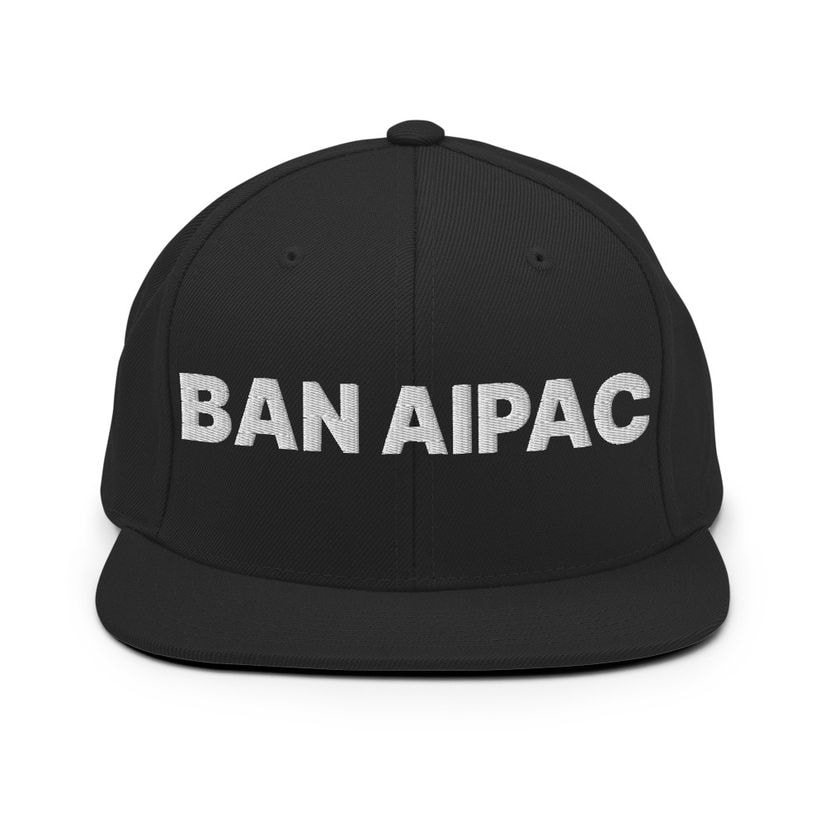
Putting America's people first in our own foreign policy shouldn't be controversial. Our BAN AIPAC snapback is the bluntest hat we make, and it's aimed at a lobbying system, not at any people or faith. If you'd rather start with the broader point, read The Case Against Lobbying, Made Plainly.
On WeWrite, our page on the Spirit of 1776 explains why independence is in our tagline.
Shop the Hat
American policy for American people. BAN AIPAC black snapbackMade on demand. Checkout on Printful.
Sources
- U.S. Department of Justice, Foreign Agents Registration Act: https://www.justice.gov/nsd-fara
- FARA eFile public search: https://efile.fara.gov/
- OpenSecrets, Foreign Lobby Watch (2024): https://www.opensecrets.org/fara?cycle=2024
- U.S. Department of Justice Office of the Inspector General, "Audit of the National Security Division's Enforcement and Administration of the Foreign Agents Registration Act" (Sept. 2016): https://oig.justice.gov/archives/reports/2016/a1624.pdf
- George Washington, Farewell Address (1796), Avalon Project: https://avalon.law.yale.edu/18th_century/washing.asp
- 52 U.S.C. § 30121, Contributions and donations by foreign nationals (Cornell LII): https://www.law.cornell.edu/uscode/text/52/30121
Shop the hat
Keep reading
November 7, 2026
Why Americans Stopped Trusting Washington
Only 17% of Americans trust the federal government most of the time. Why trust collapsed under both parties, and what would earn it back.
November 7, 2026
The Right to Petition: Lobbying Was Supposed to Be Yours
The First Amendment protects your right to petition the government. How it got professionalized, and how ordinary citizens can use it well.
November 7, 2026
The Elections Nobody Shows Up For
In some big cities, fewer than 1 in 10 people vote for mayor. Why local elections matter more than you think, and a simple plan to show up.