The Elections Nobody Shows Up For
In some big cities, fewer than 1 in 10 people vote for mayor. Why local elections matter more than you think, and a simple plan to show up.
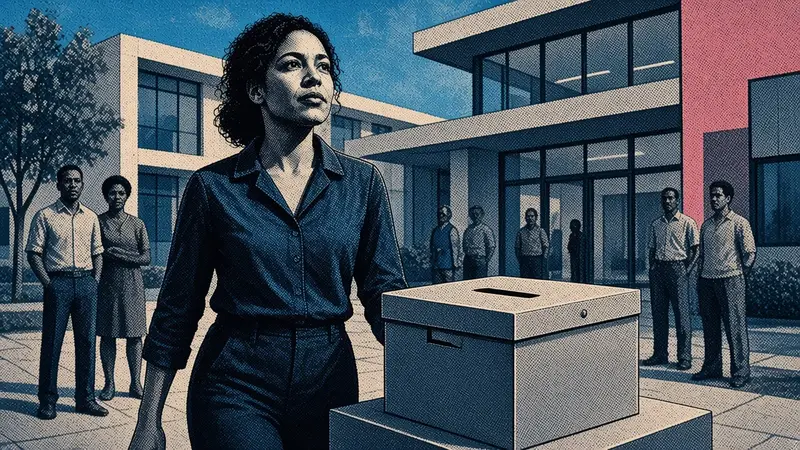
Every four years, Americans pour their energy into one race. The presidency gets the ads, the debates, the family arguments. Then the same country mostly skips the elections that decide how their own town runs.
That's backwards, and it's one of the easiest things about American politics for regular people to fix.
How Few People Vote Locally
Researchers at Portland State University studied mayoral elections in the 50 largest U.S. cities for their project "Who Votes for Mayor?". The turnout numbers were startling. In ten of those cities, fewer than 15 percent of eligible voters cast a ballot for mayor. In Dallas it was about 6 percent. In Fort Worth, about 6.5 percent. In Las Vegas, about 9 percent.
Think about what that means. In a city of over a million people, a mayor can win with the votes of a few percent of residents. A school board seat, a county commission seat, or a judgeship might be decided by a few hundred votes.
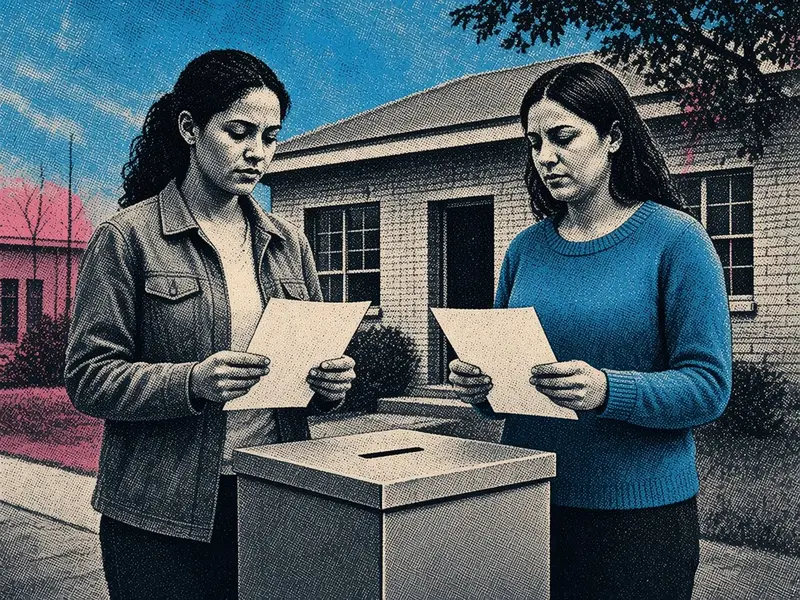
Why the Small Races Matter More Than You Think
Local governments set your property taxes. They run your schools, police, and water. They decide what gets built near you, whether your street gets paved, and how your local elections are run. A lot of daily life is shaped by people most voters can't name.
These offices are also where national politicians come from. Today's city council member is tomorrow's state legislator and the next decade's member of Congress. If you don't like the choices on your presidential ballot, the place to change them is ten years earlier, at the bottom.
And because so few people show up, a small group of organized residents can make an outsized difference. That cuts both ways. Developers, public-employee unions, business groups, and party activists already know local races are cheap to influence. The only thing that balances them is ordinary people paying attention.
The Portland State researchers also found that the people who do vote in city elections skew much older than the cities they live in. Younger residents are the least likely to show up, even though they have the most years left to live with what city hall decides about housing, schools, and transit. When a small and unrepresentative group decides local races, the results reflect that group.
The Founders Started Local
The American Revolution didn't start in a national capital. It started in town meetings, colonial assemblies, and committees of correspondence, where neighbors argued, organized, and wrote to other towns. Self-government was a habit people practiced close to home before they ever tried it as a nation.
Alexis de Tocqueville noticed this when he traveled the country in the 1830s. In Democracy in America, he wrote that "town-meetings are to liberty what primary schools are to science; they bring it within the people's reach." That's still true. Local politics is where you learn how power actually works.
We wrote about that root idea in You Are Not Our Government; We Are. Local government is where it's most literally true.

The Party Problem Shows Up Here Too
Most local elections are officially nonpartisan. But national party fights increasingly creep into school boards and city halls, with outside money and talking points that have little to do with the town. You don't have to take that bait. Local issues usually aren't left or right. They're about whether the streets are safe, the budget is honest, and the people in charge listen.
A local race is one of the few places where you can still judge a candidate as a neighbor, not a party label. It's a chance to practice what we argued in Neither Party Will Save You.
A Simple Plan
You don't have to become a political junkie. Try this for one year:
- Find out who represents you. Your city or county website lists your council member, school board member, and county officials. Write the names down.
- Learn your local election dates. Many cities hold elections in odd years or in spring, when turnout is lowest. Put them on your calendar.
- Go to one meeting. City council and school board meetings are open to the public, and most have a public comment period. You don't have to speak. Just watch how decisions get made.
- Read the budget summary. It's usually a short document, and it tells you more about local priorities than any speech.
- Vote in every local election. If turnout is 10 percent, your vote counts about ten times as much as it would in a high-turnout race.
- Bring one person. A neighbor, a coworker, a friend. Doubling local turnout would change who wins.
Why This Is Patriotic
Patriotism isn't watching the country from the stands. It's showing up. The Spirit of 1776 was ordinary people deciding they could run their own affairs. The easiest place to start is the room where your town's budget gets voted on.
Wear It
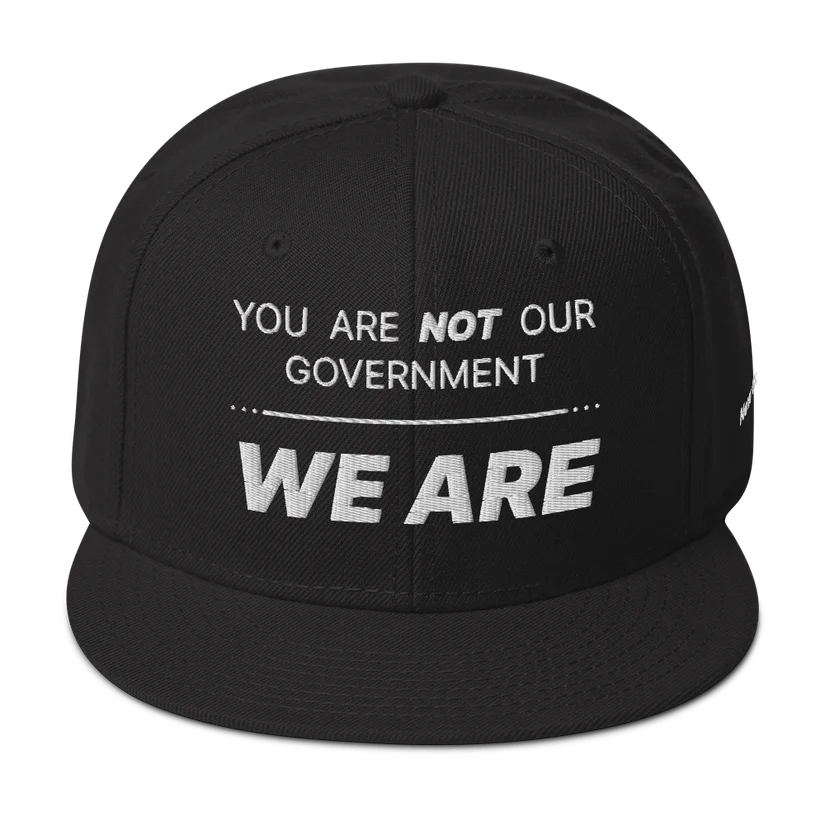
Our most direct hat is made for this: You are not our government, WE ARE. Wear it to a council meeting. It's a good conversation starter in the back row.
We keep a short WeWrite page for the slogan, You are not our government, WE ARE.
Shop the Hat
Show up. Wear it. You are not our government, WE ARE snapbackMade on demand. Checkout on Printful.
Sources
- Jason Jurjevich, Phil Keisling et al., "Who Votes for Mayor?" Portland State University (PDXScholar): https://pdxscholar.library.pdx.edu/usp_fac/166
- EurekAlert!, "Turnout for mayoral elections abysmally low": https://www.eurekalert.org/news-releases/473929
- Alexis de Tocqueville, Democracy in America, Vol. 1, ch. 5 (Project Gutenberg): https://www.gutenberg.org/ebooks/815
Shop the hat
Keep reading
November 7, 2026
Why Americans Stopped Trusting Washington
Only 17% of Americans trust the federal government most of the time. Why trust collapsed under both parties, and what would earn it back.
November 7, 2026
The Right to Petition: Lobbying Was Supposed to Be Yours
The First Amendment protects your right to petition the government. How it got professionalized, and how ordinary citizens can use it well.
November 7, 2026
Who Lobbies for Foreign Governments in Washington?
Foreign agents reported more than $1.1 billion in 2024. What FARA requires, where it falls short, and why Washington warned about foreign influence.