Neither Party Will Save You
Washington and Adams warned against two-party rule. Why New Continent opposes both major parties, and why your loyalty belongs to the people.
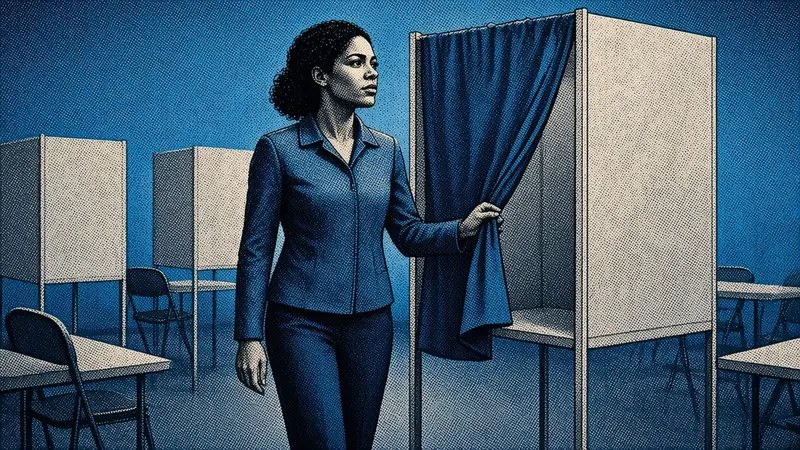
There is a question every American is asked, sooner or later, at a dinner table or in a comment section: Which side are you on? The question assumes there are two sides and that you must choose one. We reject the assumption.
This is not indifference. It is an older and more demanding loyalty, to the republic itself. The founders who built this country feared precisely the condition we now treat as normal.
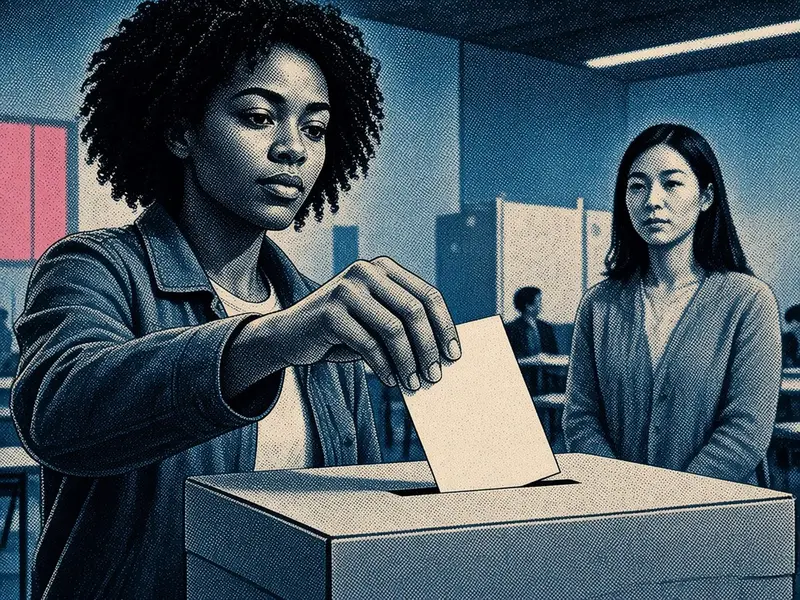
Adams Named It First
In October 1780, John Adams wrote from Amsterdam to Jonathan Jackson, a fellow member of the Massachusetts constitutional convention:
"There is nothing I dread So much, as a Division of the Republick into two great Parties, each arranged under its Leader, and concerting Measures in opposition to each other. This, in my humble Apprehension is to be dreaded as the greatest political Evil, under our Constitution."
(The capitals and spelling are Adams's own. The constitution he had in mind was the new Massachusetts constitution of 1780, which he helped draft. But the warning travels well.)
Two great parties, each under its leader, each concerting measures against the other. Read that and look at Washington today. Adams did not need a crystal ball. He needed only to understand human nature.

Washington Made It His Farewell
Sixteen years later, George Washington chose to spend a large part of his Farewell Address on the same danger. He wrote that he wished to "warn you in the most solemn manner against the baneful effects of the spirit of party generally."
He explained why: "The alternate domination of one faction over another, sharpened by the spirit of revenge, natural to party dissension, which in different ages and countries has perpetrated the most horrid enormities, is itself a frightful despotism."
Alternate domination. One side wins and punishes the other. Then the other side wins and returns the favor. Each election is sold as the most important of our lifetimes, and each one leaves the lobbyists, the donors, and the permanent machinery of Washington exactly where they were.
Washington was not naive about why this happens. He observed that the party spirit "exists under different shapes in all governments" but, "in those of the popular form, it is seen in its greatest rankness, and is truly their worst enemy." The more power the people hold, the more valuable it becomes to capture their passions.
Madison's Remedy Was Not a Team
James Madison, in Federalist No. 10, defined a faction as citizens "united and actuated by some common impulse of passion, or of interest, adversed to the rights of other citizens, or to the permanent and aggregate interests of the community." He did not exempt the factions he liked.
His remedy was not to pick the right faction and give it power. It was to design a system where no single faction could rule unchecked, and to rely, as he wrote in Federalist No. 51, on "a dependence on the people" as "the primary control on the government."
The people. Not the party.
What Both Parties Share
It is worth being specific about what we mean. We do not claim the two parties are identical on every question. They are not. We claim that they share certain habits that ought to concern every citizen:
- Both accept money from organized interests and both employ the services of the lobbying industry. Public Lobbying Disclosure Act filings show registered lobbyists working both sides of the aisle.
- Both send former members through the revolving door. Federal law restricts former members from lobbying Congress for only a limited time after leaving office, as we discuss in The Case Against Lobbying, Made Plainly.
- Both ask for your loyalty in advance. They want your vote before they have earned it, and your silence after they have failed to.
A citizen who belongs wholly to a party has handed away his leverage. A citizen who belongs to the republic keeps it.

The Loyalty That Remains
If not a party, then what? The answer is written at the top of the Constitution: "We the People of the United States." The Declaration says just powers come "from the consent of the governed." Neither document mentions a party, because the founders did not think a party was the proper home of a free man's allegiance.
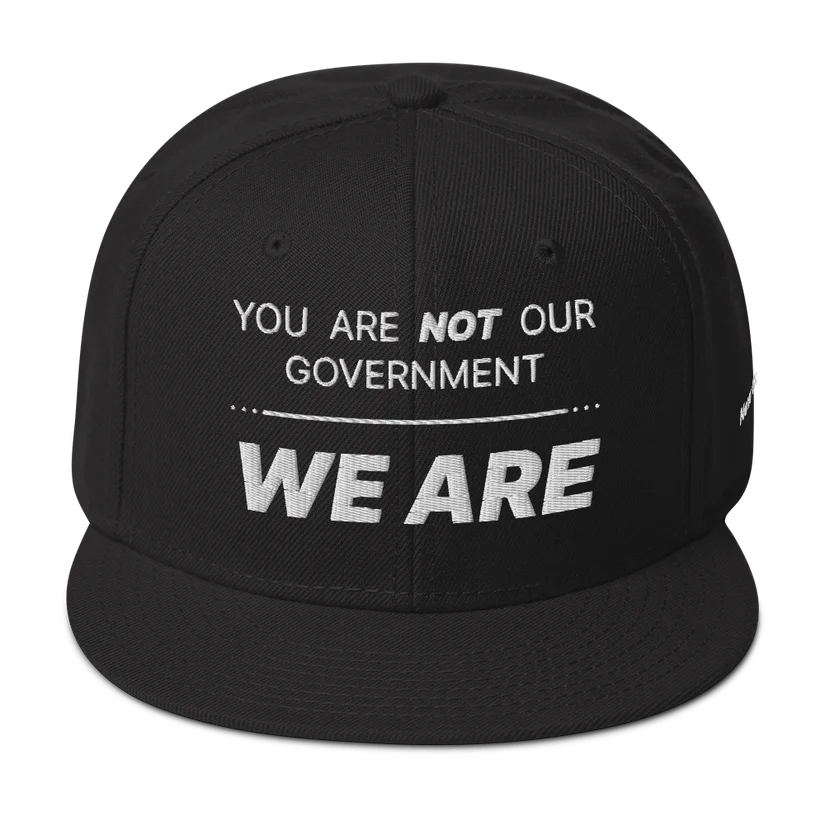
That is why we make our You are not our government, WE ARE snapback. It is not addressed to Democrats or to Republicans. It is addressed to anyone in power, of either stripe, who has begun to confuse holding office with owning the country.
Wear it to a rally of the party you usually vote for. That is where it takes courage, and that is where it does the most good. We expand on the idea in You Are Not Our Government; We Are.
Nobody Is Coming
Paine wrote in Common Sense that "government even in its best state is but a necessary evil." He did not mean that government is worthless. He meant that it must be watched, and that the watching cannot be delegated.
No party will save you. No candidate will save you. A hat that says WE ARE will not save you either, but it will remind people whose job it is. That is not a counsel of despair. It is a description of how a republic is supposed to work. The saving was always our job.
This hat's slogan also has its own page on WeWrite: You are not our government, WE ARE.
Shop the Hat
Loyal to the republic, not the party.You are not our government, WE ARE black snapback.Made on demand. Checkout on Printful.
Sources
- John Adams to Jonathan Jackson, 2 October 1780, Founders Online (National Archives): https://founders.archives.gov/documents/Adams/06-10-02-0113
- George Washington, Farewell Address (1796), Avalon Project: https://avalon.law.yale.edu/18th_century/washing.asp
- The Federalist Papers, Nos. 10 and 51, Project Gutenberg: https://www.gutenberg.org/ebooks/1404
- U.S. Constitution, transcript (National Archives): https://www.archives.gov/founding-docs/constitution-transcript
- Declaration of Independence, transcript (National Archives): https://www.archives.gov/founding-docs/declaration-transcript
- Thomas Paine, Common Sense (1776), Project Gutenberg: https://www.gutenberg.org/ebooks/147
- Lobbying Disclosure, Office of the Clerk, U.S. House: https://lobbyingdisclosure.house.gov/
Shop the hat
Keep reading
November 7, 2026
The Case Against Lobbying, Made Plainly
A plain, founders-grounded case against the lobbying industry, from Federalist No. 10 to the revolving door. Not for either party. For the people.
November 7, 2026
You Are Not Our Government; We Are
We the People, the consent of the governed, and Madison's 'only legitimate fountain of power': the founding case behind our We Are hat.
November 7, 2026
Why Americans Stopped Trusting Washington
Only 17% of Americans trust the federal government most of the time. Why trust collapsed under both parties, and what would earn it back.