You Are Not Our Government; We Are
We the People, the consent of the governed, and Madison's 'only legitimate fountain of power': the founding case behind our We Are hat.

Somewhere along the way, Americans began speaking of "the government" as though it were a separate creature: a landlord, a weather system, a distant company that sends us bills. We say they raised taxes, they passed a law, they will never listen.
The founders would have found this way of speaking strange, and a little dangerous. In their understanding, the government was never they. It was a set of offices we lend, for a time, to people we choose. The authority stays with us.
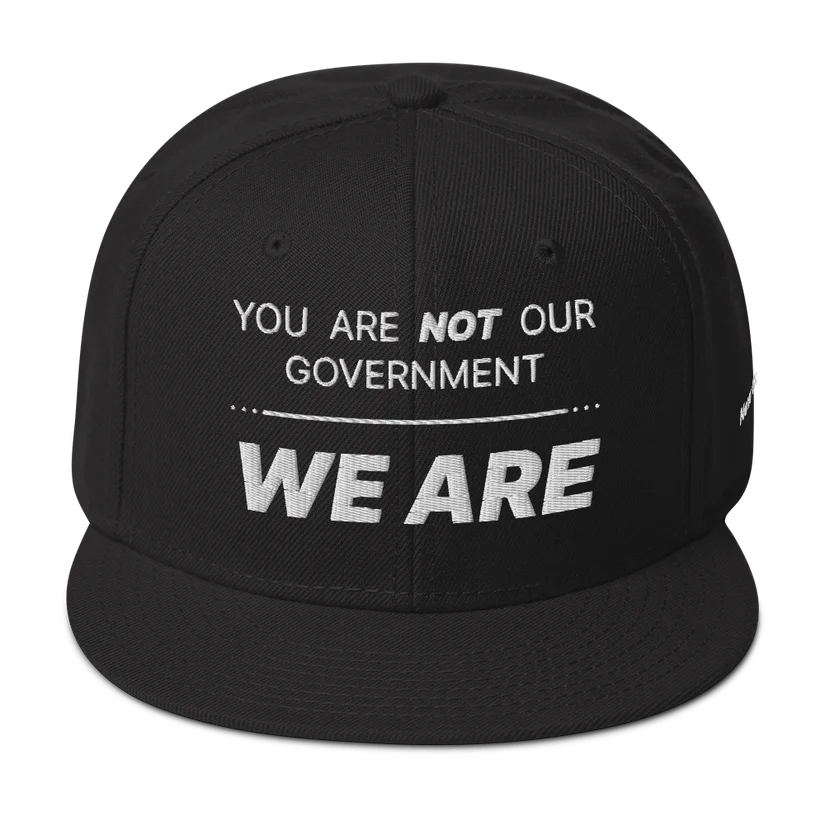
Our hat says it in seven words: You are not our government. We are. Here is the founding case behind those words.
The First Three Words
The Constitution does not begin with Congress, the President, or the courts. It begins:
"We the People of the United States, in Order to form a more perfect Union, establish Justice, insure domestic Tranquility, provide for the common defence, promote the general Welfare, and secure the Blessings of Liberty to ourselves and our Posterity, do ordain and establish this Constitution for the United States of America."
The grammar matters. We the People is the subject. Do ordain and establish is the verb. The government is the object, the thing made. A creation does not outrank its maker.

Consent, and the Right to Withdraw It
Eleven years earlier, the Declaration of Independence set out the principle more sharply. Governments, it says, are "instituted among Men, deriving their just powers from the consent of the governed," and "whenever any Form of Government becomes destructive of these ends, it is the Right of the People to alter or to abolish it, and to institute new Government."
We quote that passage not to call for upheaval. The founders themselves added, in the very next lines, that "Prudence, indeed, will dictate that Governments long established should not be changed for light and transient causes." We quote it because it settles the question of who is in charge. Powers that are just come from consent. Powers that come from anywhere else (money, inheritance, party machinery) are not just, however legal they may be.
Madison: The Only Legitimate Fountain
James Madison returned to this idea again and again in the Federalist Papers. In Federalist No. 46 he reminded those who imagined the state and federal governments as rivals that "the ultimate authority, wherever the derivative may be found, resides in the people alone."
In Federalist No. 49 he called the people "the only legitimate fountain of power," from whom "the constitutional charter, under which the several branches of government hold their power, is derived."
Hold their power. Officials hold it the way a tenant holds a lease. The deed is ours.
Paine: Let the Law Be King
Thomas Paine, in Common Sense, imagined a ceremony for the new American republic. A crown would be placed upon the law, "by which the world may know, that so far as we approve of monarchy, that in America the law is king. For as in absolute governments the King is law, so in free countries the law ought to be King; and there ought to be no other."
Then came the part we love best: "lest any ill use should afterwards arise, let the crown at the conclusion of the ceremony be demolished, and scattered among the people whose right it is."
Scattered among the people. That is the whole of American self-government in a sentence. The crown was not abolished. It was distributed. Every citizen holds a fragment of it.

Who Has Forgotten This?
Both major parties, at one time or another, have spoken as though winning an election transferred ownership of the country. Lobbyists and large donors speak of "access" as though it were a property right. Career officeholders sometimes speak of "my seat" as though it came with a title.
They are mistaken, and it is our duty to remind them politely and persistently. That is not partisanship. It is maintenance. We take up the problem of both parties directly in Neither Party Will Save You.
What It Means to Wear It
Our You are not our government, WE ARE snapback is meant, in the words of its product page, to "wear the spirit of We The People," and to let lobbyists and the powerful know you are watching.
That is a small act. But Madison wrote in Federalist No. 51 that "a dependence on the people is, no doubt, the primary control on the government." A control that does not pay attention is no control at all. Attention, made visible, is where it starts.
Abraham Lincoln, standing at Gettysburg in 1863, resolved that "government of the people, by the people, for the people shall not perish from the earth." Notice that he did not say government for the people alone. Governments of every kind claim to act for the people. Only a free one is of them and by them.
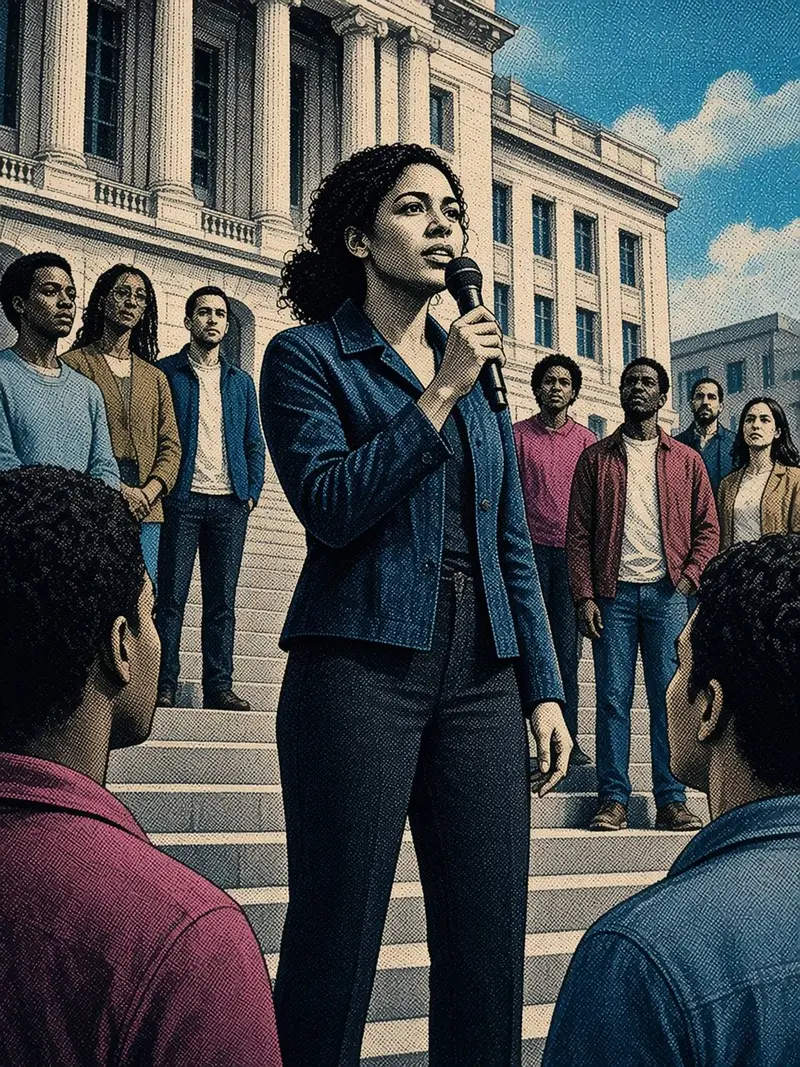
The Work That Follows
Wearing a slogan is not the same as living it. So, alongside the WE ARE hat:
- Show up to town halls, school boards, and city councils, where your share of the crown carries the most weight.
- Read what is done in your name. Laws, budgets, and lobbying filings are public.
- Vote in primaries, where fewer citizens decide who the rest of us may choose.
For the deeper roots of this idea, read Common Sense, 250 Years On.
On WeWrite, the slogan has its own page, You are not our government, WE ARE, and Spirit of 1776 explains the tagline behind all our hats.
Shop the Hat
The crown is scattered among us.You are not our government, WE ARE black snapback.Made on demand. Checkout on Printful.
Sources
- U.S. Constitution, transcript (National Archives): https://www.archives.gov/founding-docs/constitution-transcript
- Declaration of Independence, transcript (National Archives): https://www.archives.gov/founding-docs/declaration-transcript
- The Federalist Papers, Nos. 46, 49 and 51, Project Gutenberg: https://www.gutenberg.org/ebooks/1404
- Thomas Paine, Common Sense (1776), Project Gutenberg: https://www.gutenberg.org/ebooks/147
- Abraham Lincoln, Gettysburg Address (1863), Avalon Project: https://avalon.law.yale.edu/19th_century/gettyb.asp
- New Continent, "You are not our government, WE ARE": https://www.newcontinent.us/product/you-are-not-our-government-we-are-snapback-hat
Shop the hat
Keep reading
November 7, 2026
Neither Party Will Save You
Washington and Adams warned against two-party rule. Why New Continent opposes both major parties, and why your loyalty belongs to the people.
November 7, 2026
Common Sense, 250 Years On
Thomas Paine's Common Sense turned 250 in 2026. What the pamphlet actually said, in his own words, and why it still speaks to both parties' critics.
November 7, 2026
Why Americans Stopped Trusting Washington
Only 17% of Americans trust the federal government most of the time. Why trust collapsed under both parties, and what would earn it back.