Common Sense, 250 Years On
Thomas Paine's Common Sense turned 250 in 2026. What the pamphlet actually said, in his own words, and why it still speaks to both parties' critics.

On January 10, 1776, a Philadelphia printer named Robert Bell put on sale a pamphlet with no author's name on it. It was titled Common Sense; Addressed to the Inhabitants of America. According to the House of Representatives' own historians, the author's name was not officially connected with it until nearly three months later. By then it hardly mattered. The argument had already done its work.
This year marked the 250th anniversary of that pamphlet. Our brand takes its name and its voice from it. So it seems right, as the anniversary year draws to a close, to return to what Thomas Paine actually wrote, rather than what is often said he wrote.

What the Pamphlet Contained
The title page of Bell's edition, preserved by the Library of Congress, lists four subjects:
- "Of the origin and design of government in general, with concise remarks on the English Constitution."
- "Of monarchy and hereditary succession."
- "Thoughts on the present state of American affairs."
- "Of the present ability of America, with some miscellaneous reflections."
It was, in other words, a complete argument: a theory of government, a critique of hereditary power, an analysis of the crisis, and a practical case that independence could actually be achieved. Paine did not merely complain. He made a plan.
Government as a Necessary Evil
Paine begins by separating two things we often confuse. "Society in every state is a blessing," he wrote, "but government even in its best state is but a necessary evil; in its worst state an intolerable one."
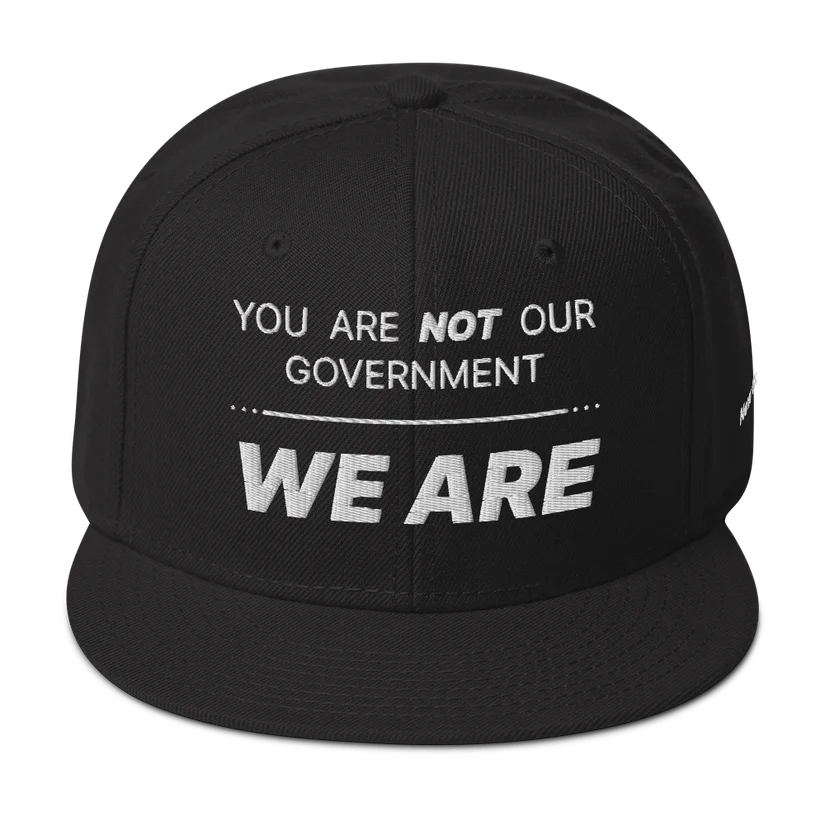
This is not anarchism. Paine wanted a government, and a good one. But he wanted citizens to understand that government is a tool, made by society for its own protection, and never its master. When a tool begins to serve its makers poorly, the makers have every right to say so. Our You are not our government, WE ARE snapback is that idea, set in thread. We explore it in You Are Not Our Government; We Are.
The Habit of Not Thinking
The most quoted line of the introduction is also the most useful today: "a long habit of not thinking a thing wrong, gives it a superficial appearance of being right, and raises at first a formidable outcry in defense of custom. But the tumult soon subsides. Time makes more converts than reason."
In 1776, the custom was monarchy. It had been in place so long that many colonists could not picture life without a king. Paine's genius was to make the familiar look strange.
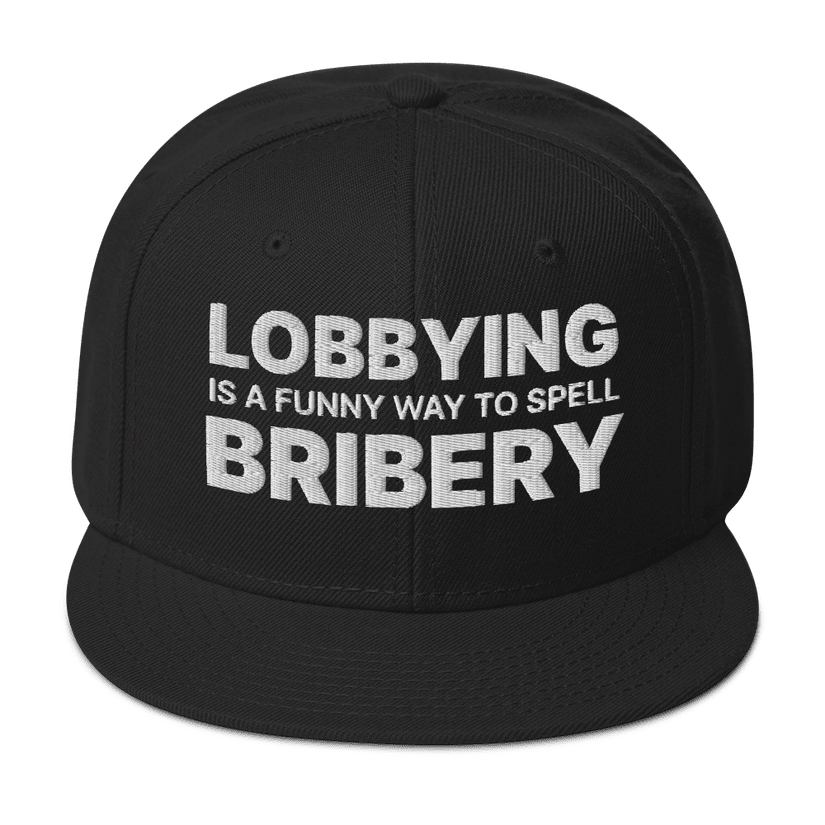
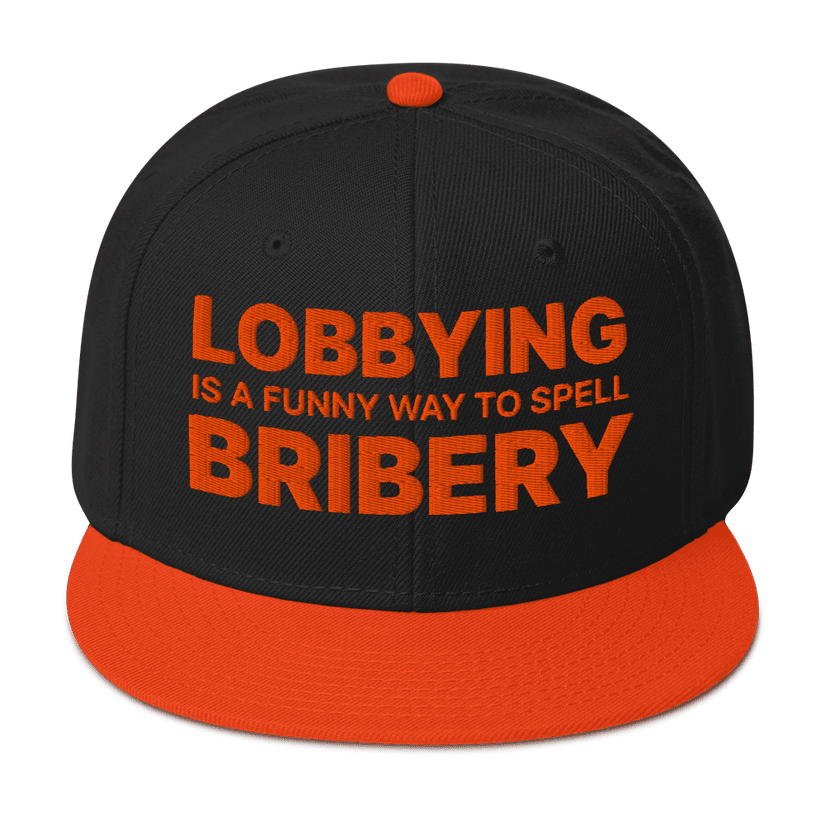
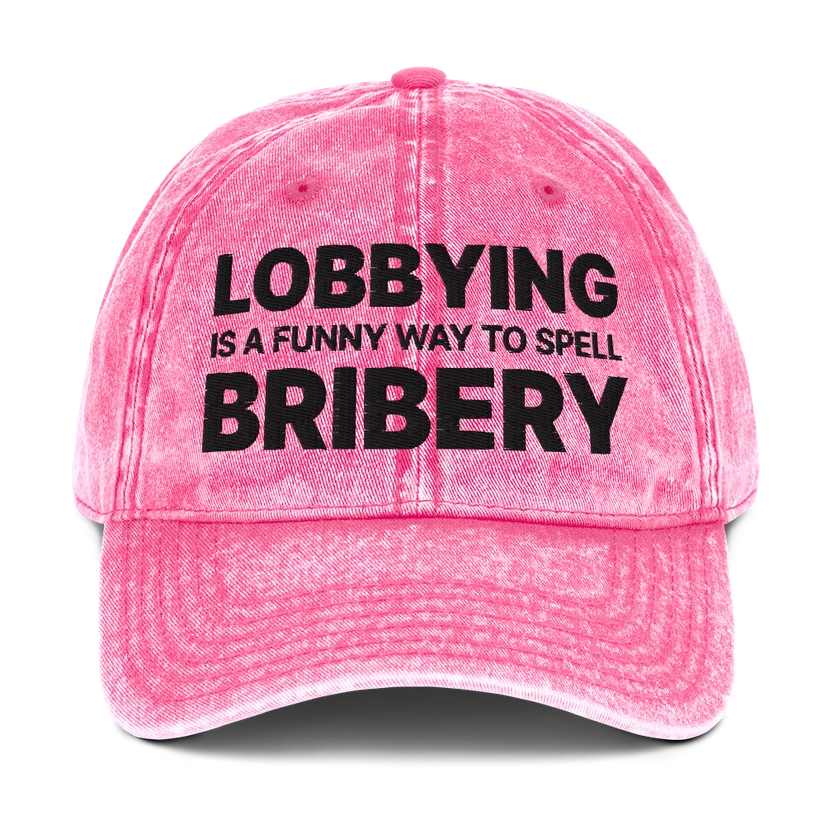
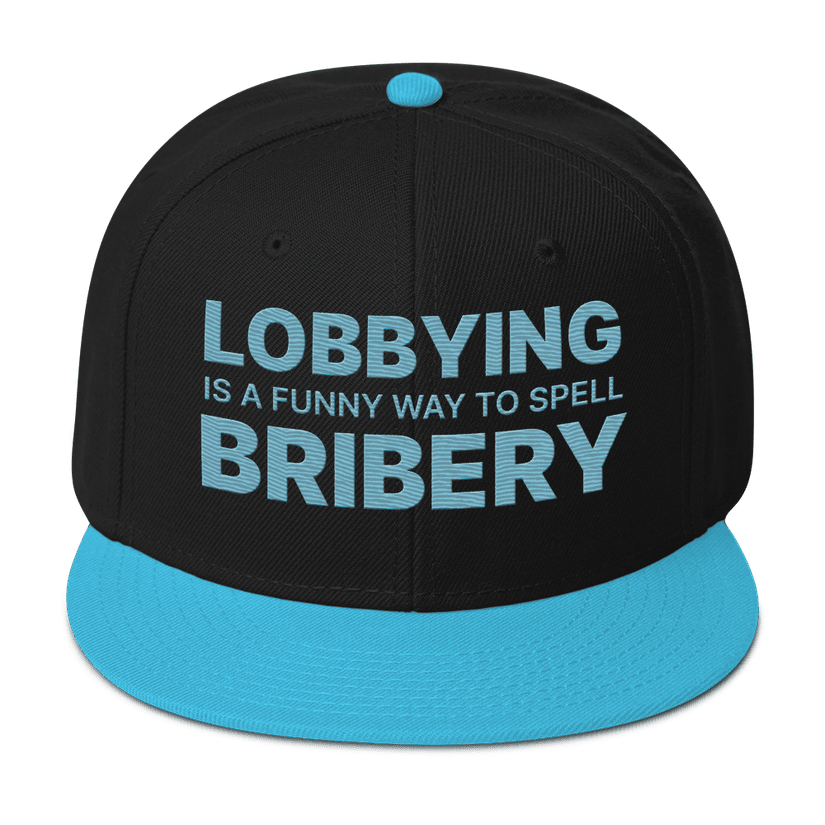
Our customs are different. We are accustomed to a capital crowded with professional lobbyists, where both parties finance their campaigns from the same pools of organized money, and where the revolving door between office and influence spins without much shame. These things are lawful. They are also, by long habit, invisible. Our Lobbying is a funny way to spell BRIBERY hat is our small attempt at Paine's method: to make the familiar look strange again. (It comes in four colors; see below.)
One Honest Man
Paine's treatment of kings was not gentle. "Male and female are the distinctions of nature, good and bad the distinctions of heaven," he wrote, "but how a race of men came into the world so exalted above the rest, and distinguished like some new species, is worth enquiring into."
And he concluded the section with a line that still stings: "Of more worth is one honest man to society and in the sight of God, than all the crowned ruffians that ever lived."
We have no crowns left to oppose. But the instinct Paine attacked, the idea that some people are born or bought into a higher political rank than others, never quite dies. It returns as dynasties, as donor classes, as permanent party establishments. The answer remains the same: the honest citizen outranks them all.

The Law Is King
Paine's most beautiful passage imagines the new republic crowning not a man but its charter, "that in America the law is king. For as in absolute governments the King is law, so in free countries the law ought to be King; and there ought to be no other."
Then the crown is to be "demolished, and scattered among the people whose right it is." This is popular sovereignty in a single image, and it belongs to no party. Both parties, when in power, forget it. Both parties, when out of power, rediscover it. A citizen's job is to remember it all the time.

Seed Time
Paine wrote that his cause was "not the affair of a city, a country, a province, or a kingdom, but of a continent." That is where the name New Continent comes from; the full story is in The Spirit of '76, Still Fitting.
He also wrote: "Now is the seed time of continental union, faith and honor. The least fracture now will be like a name engraved with the point of a pin on the tender rind of a young oak; the wound will enlarge with the tree, and posterity read it in full grown characters."
Two hundred fifty years later, we are the posterity he wrote of. We can read the characters. Some of them are noble, and some are wounds. What gets engraved now, our generation's habits of corruption or reform, will be read by those who come after us.
The Same Method, Plainly
Paine asked nothing of his reader except that he "divest himself of prejudice and prepossession, and suffer his reason and his feelings to determine for themselves." That is all we ask too. Read the pamphlet. It is free, it is short, and it is better than anything we could write about it.
Then decide what plain words you would put on your own head. Ours include a stand against foreign-interest lobbying, our BAN AIPAC snapback, a principle Washington himself urged.
On WeWrite, Spirit of 1776 explains our tagline, and our New Continent brand hub tells how the brand began.
Shop the Hat
Plain words, worn plainly.Lobbying is a funny way to spell BRIBERY: Black · Orange · Pink dad cap · TropicalYou are not our government, WE ARE · BAN AIPACMade on demand. Checkout on Printful.
Sources
- Thomas Paine, Common Sense (1776), Project Gutenberg: https://www.gutenberg.org/ebooks/147
- Library of Congress, title page of Common Sense (Philadelphia: R. Bell, 1776): https://www.loc.gov/item/2006681076/
- Library of Congress, "250 Years Ago: Thomas Paine's Common Sense" (Headlines & Heroes, Jan. 2026): https://blogs.loc.gov/headlinesandheroes/2026/01/250-years-ago-thomas-paines-common-sense/
- U.S. House of Representatives, History, Art & Archives, "Common Sense and the Continental Congress": https://history.house.gov/Blog/2026/January/1-8-Common-Sense/
- George Washington, Farewell Address (1796), Avalon Project: https://avalon.law.yale.edu/18th_century/washing.asp
Shop the hat
Black · Snapback
Lobbying is a funny way to spell BRIBERY
K Street won't like this one.
$33
View hatOrange · Snapback
Orange Lobbying / BRIBERY
Orange is the new Green.
$33
View hatPink · Dad cap
Pink Lobbying / BRIBERY dad cap
Bribery, dressed up.
$33
View hatTropical · Snapback
Tropical / blue Lobbying / BRIBERY
Flex on the lobbyists.
$33
View hatBlack · Snapback
You are not our government, WE ARE
Wear the spirit of the people.
$33
View hatBlack · Snapback
BAN AIPAC - Black Snapback
A bold stand against foreign influence.
$30
View hat

Keep reading
November 7, 2026
You Are Not Our Government; We Are
We the People, the consent of the governed, and Madison's 'only legitimate fountain of power': the founding case behind our We Are hat.
November 7, 2026
The Spirit of '76, Still Fitting
Why New Continent makes hats with something to say: the spirit of '76, Paine's continent, and a frontier that was never a place. It was us.
November 7, 2026
Why Americans Stopped Trusting Washington
Only 17% of Americans trust the federal government most of the time. Why trust collapsed under both parties, and what would earn it back.