Ranked-Choice Voting, Explained Without the Spin
How ranked-choice voting works, where Americans already use it, the honest criticisms, and why Alaska kept it by 743 votes.

Every election season, millions of Americans face the same bad choice. Vote for the candidate you actually like and risk "wasting" your vote. Or hold your nose and vote for the lesser evil so the greater evil doesn't win.
That trap is a big reason the two parties stay on top. Ranked-choice voting is one of the simplest ways out of it, and it's already in use in real American elections.
How It Works
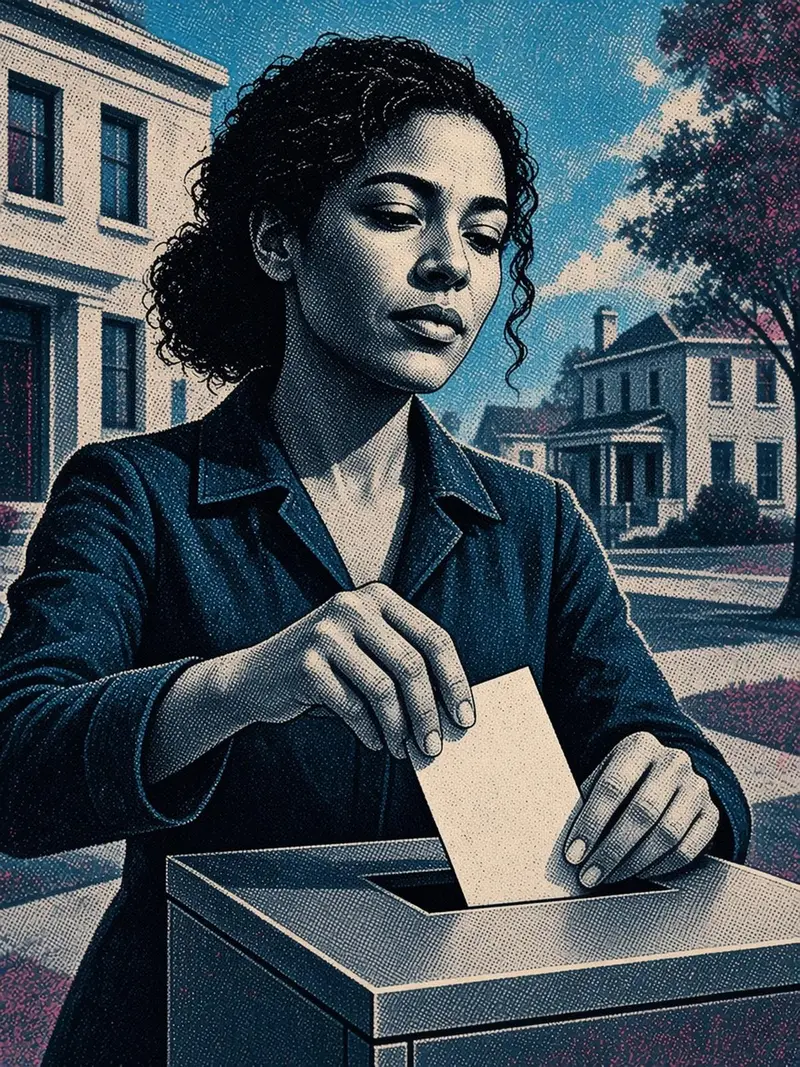
Instead of picking one candidate, you rank them: first choice, second choice, third, and so on. You can rank as many or as few as you want.
If someone gets more than half the first-choice votes, they win, just like now. If nobody does, the candidate in last place is eliminated. Anyone who ranked that candidate first has their vote move to their next choice. The counting repeats until someone has a majority.
That's it. You can vote for the long shot you believe in without helping the candidate you like least. If your first choice can't win, your vote still counts for your next choice.

Where It's Already Used
This isn't a theory.
Maine voters adopted ranked-choice voting by ballot initiative in 2016 and now use it for primaries and federal general elections. Alaska voters passed Ballot Measure 2 in 2020, which created open, top-four primaries and ranked-choice general elections. New York City uses it in party primaries for mayor and other city offices. Portland, Oregon, started using it in 2024 to elect its mayor and a new, larger city council, as our photos from that ballot show. Dozens of other cities use it locally. FairVote, a group that advocates for the system, keeps a running list.
Alaska is the best test of whether voters like it after they've used it. In 2024, a measure to repeal the state's open primaries and ranked-choice voting went on the ballot. It failed by 743 votes, 160,973 to 160,230, confirmed after a recount. That's about as close as an election gets. It tells you voters are genuinely split, and also that a system the party machines disliked survived a direct vote.
Why the Parties Don't Love It
Ranked-choice voting takes away the parties' favorite argument: "a vote for anyone else is a vote for the other side." Once that argument is gone, independents and third-party candidates can run without being labeled spoilers. Candidates also have an incentive to talk to voters who won't rank them first, since second-choice votes can decide close races. That rewards broad appeal over red-meat attacks.
A record 45 percent of Americans identified as political independents in Gallup's 2025 average. That's a lot of people with no good way to express themselves under the current rules. We wrote about that frustration in Neither Party Will Save You.
The Honest Criticisms
Ranked-choice voting has real critics, and it's worth hearing them.
- It's more complex. Ballots are longer, and some voters rank only one candidate. Results can take longer, because the rounds of counting have to wait for all ballots.
- Some votes "exhaust." If you don't rank anyone still in the final round, your ballot doesn't count in that round.
- It doesn't fix everything. It won't end gerrymandering or dark money on its own. A candidate can still win while many voters are unhappy.
Several states have gone the other way and passed laws banning ranked-choice voting. Supporters and opponents both claim the evidence is on their side. Our view is narrower: the main argument against it, "it's confusing," is the same argument people made against every voting change, and voters in Maine and Alaska figured it out. Let communities try it and decide for themselves, rather than letting party leaders ban it before voters get a say.
A Very American Idea
The founders didn't write political parties into the Constitution. George Washington spent part of his Farewell Address warning against "the spirit of party," which he said "agitates the community with ill-founded jealousies and false alarms." He didn't think the country should be divided into two permanent teams.
The rules we vote under aren't sacred. They're choices. When the rules reward the two biggest parties and punish everyone else, it's fair to change them. That's not radical. That's what self-government means.
What You Can Do
Check whether your city or state lets citizens put measures on the ballot. Many of the places that use ranked-choice voting got it that way, because voters did what legislators wouldn't. Go to a city council meeting and ask whether they've looked at it for local races. And if it already exists where you live, learn how it works and explain it to a neighbor.
Wear It
Changing how we vote is one of the clearest ways to remind the people in charge who they answer to. Our hat says it in six words: You are not our government, WE ARE.
We keep a short WeWrite page for that line, You are not our government, WE ARE, and another on what New Continent is about.
Shop the Hat
Rank your choices. Remind them who's in charge. You are not our government, WE ARE snapbackMade on demand. Checkout on Printful.
Sources
- Office of the Lieutenant Governor of Alaska, "Lieutenant Governor Nancy Dahlstrom Announces Completion of Ballot Measure 2 Recount" (Dec. 2024): https://ltgov.alaska.gov/newsroom/2024/12/lieutenant-governor-nancy-dahlstrom-announces-completion-of-ballot-measure-2-recount/
- Ballotpedia, "Alaska Ballot Measure 2, Repeal Top-Four Ranked-Choice Voting Initiative (2024)": https://ballotpedia.org/Alaska_Ballot_Measure_2,_Repeal_Top-Four_Ranked-Choice_Voting_Initiative_(2024)
- Gallup, "New High of 45% in U.S. Identify as Political Independents": https://news.gallup.com/poll/700499/new-high-identify-political-independents.aspx
- FairVote, "Ranked Choice Voting": https://fairvote.org/our-reforms/ranked-choice-voting/
- Maine Secretary of State, Ranked-choice voting: https://www.maine.gov/sos/cec/elec/upcoming/rcv.html
- George Washington, Farewell Address (1796), Avalon Project: https://avalon.law.yale.edu/18th_century/washing.asp
Shop the hat

Keep reading
November 7, 2026
Why Americans Stopped Trusting Washington
Only 17% of Americans trust the federal government most of the time. Why trust collapsed under both parties, and what would earn it back.
November 7, 2026
The Right to Petition: Lobbying Was Supposed to Be Yours
The First Amendment protects your right to petition the government. How it got professionalized, and how ordinary citizens can use it well.
November 7, 2026
The Elections Nobody Shows Up For
In some big cities, fewer than 1 in 10 people vote for mayor. Why local elections matter more than you think, and a simple plan to show up.