How to Get Money Out of Politics
Real, existing reforms to get money out of politics: revolving-door limits, small-donor public financing, disclosure, and foreign-money enforcement.

Complaint is easy. Every American can name what is wrong with Washington. Fewer can name what would fix it. Paine did not stop at denouncing the Crown; half of Common Sense is a practical plan for a new government. He believed, as he wrote, "We have it in our power to begin the world over again."
We will not promise anything so grand. But there are real reforms, some already law, some already tested, that would loosen money's grip on American government. None of them belongs to either party. Here they are, plainly.
Know the Ground First
Two facts shape the field.
First, foreign money is already banned from American elections. Federal law, 52 U.S.C. § 30121, makes it "unlawful for" a foreign national "directly or indirectly" to make a contribution or donation "in connection with a Federal, State, or local election." This is settled. The question is enforcement.
Second, the Supreme Court has limited what Congress may restrict. In Citizens United v. FEC (2010), the Court held that the government may not ban independent political expenditures by corporations. Shortly afterward, the federal appeals court in SpeechNow.org v. FEC applied that reasoning to groups making only independent expenditures, opening the way for what are now called super PACs.
The scale is not abstract. To take one example from public filings: OpenSecrets, using Federal Election Commission data, reports that a single super PAC, the United Democracy Project, spent $37,860,200 in independent expenditures in the 2024 cycle (checked Nov. 4, 2026). That group is one of many, across every cause and both parties. (We look closely at that group's parent organization in Why Ban AIPAC?.)
Any serious plan must work inside these facts, or change them.
Reform One: Close the Revolving Door
Today, 18 U.S.C. § 207 bars a former Senator from lobbying Congress "within 2 years after that person leaves office," and sets a one-year restriction for former House members. Many reformers in both parties have proposed lengthening these bans, some to a lifetime ban for members of Congress.
The principle is simple. Office is a public trust, in the phrase of Federalist No. 57, which sought "the most effectual precautions for keeping them virtuous whilst they continue to hold their public trust." A trust should not be a job interview.
Reform Two: Small-Donor Public Financing
If big money cannot be easily banned, it can be outweighed. Public financing systems give ordinary citizens more weight in campaign funding.
Seattle offers a working model. Under its Democracy Voucher program, eligible residents receive vouchers, four $25 vouchers in a regular election year according to the city, which they can give to participating local candidates. Other jurisdictions match small donations with public funds. These programs are not perfect, and they deserve honest scrutiny. But they rest on a sound idea: that a campaign should be able to win by courting voters instead of donors.

Reform Three: Disclosure, Fully Enforced
Sunlight remains the cheapest remedy. The Lobbying Disclosure Act of 1995 already requires lobbyists to register and report, and those filings are public. The Foreign Agents Registration Act, enacted in 1938, requires agents of foreign principals engaged in political activities to disclose that relationship and their spending, according to the Department of Justice.
Reformers have long argued for stronger enforcement of both, and for disclosure rules that reach groups whose donors are now hidden. Disclosure does not silence anyone. It only tells the public who is speaking.

Reform Four: A Constitutional Amendment
Because Citizens United rests on the Court's reading of the First Amendment, some reformers argue only a constitutional amendment can restore broad limits on political spending. Proposals have been introduced in Congress repeatedly. This is the hardest path, and the most permanent. Article V of the Constitution makes it difficult by design. But the founders included that path on purpose, trusting the people to use it when the need was great.
We take no position on any specific amendment text. We take the position that the people should be debating it.
Reform Five: Your Own Attention
Madison wrote in Federalist No. 51 that "a dependence on the people is, no doubt, the primary control on the government." Every reform above depends on that primary control. Laws without public attention decay. Public attention without laws burns out.
So do the unglamorous things. Read the filings. Ask candidates of both parties where they stand on the revolving door, on public financing, on disclosure. Vote in primaries, where the money matters most and the turnout is lowest.
Why We Make the Hats
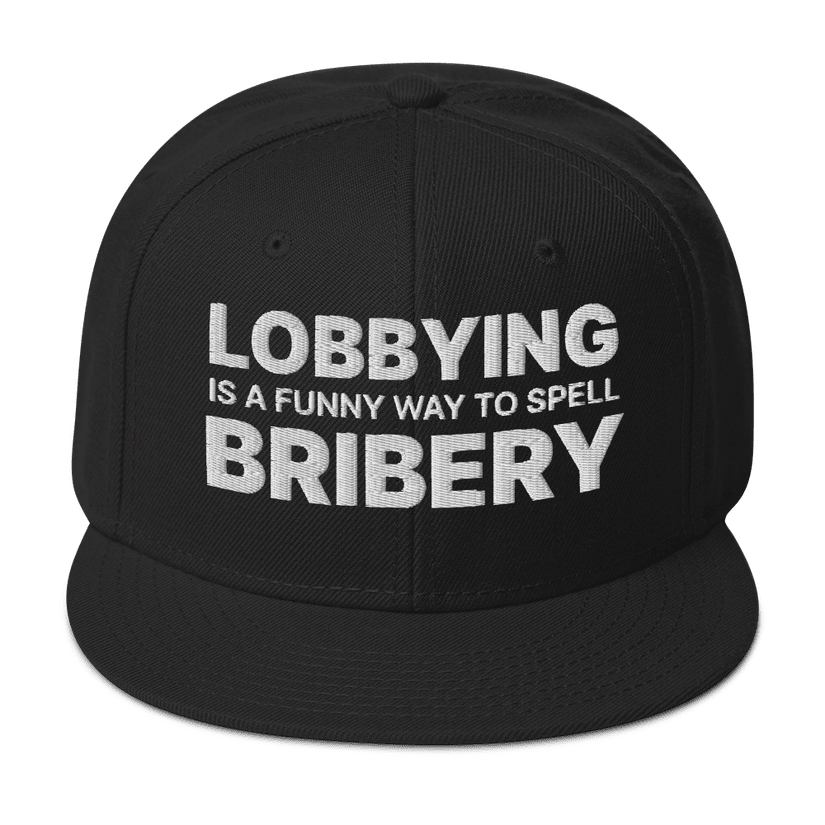
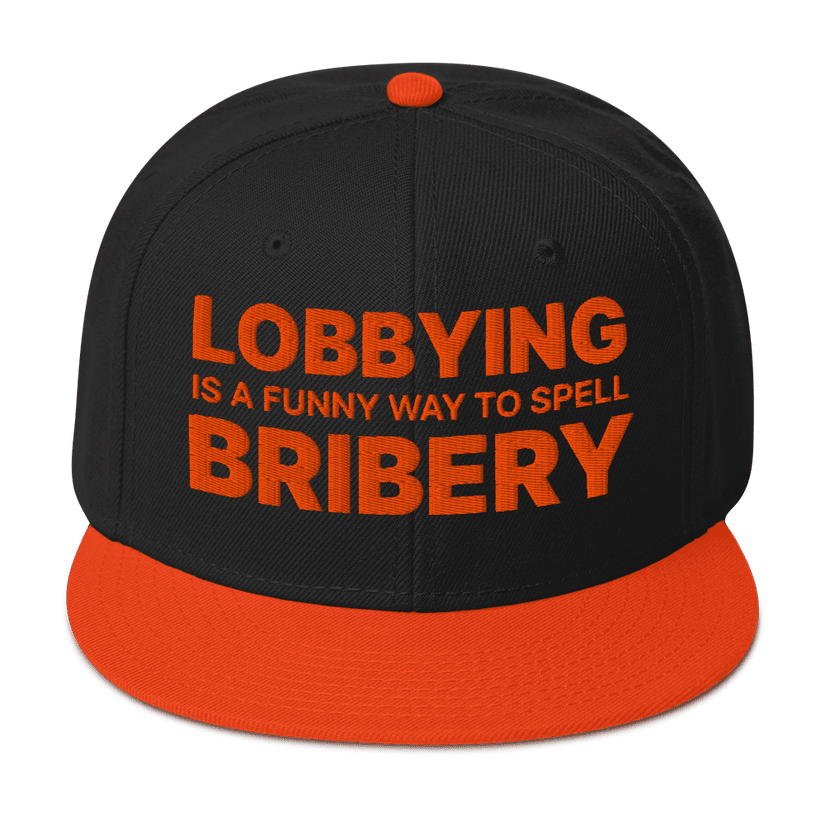
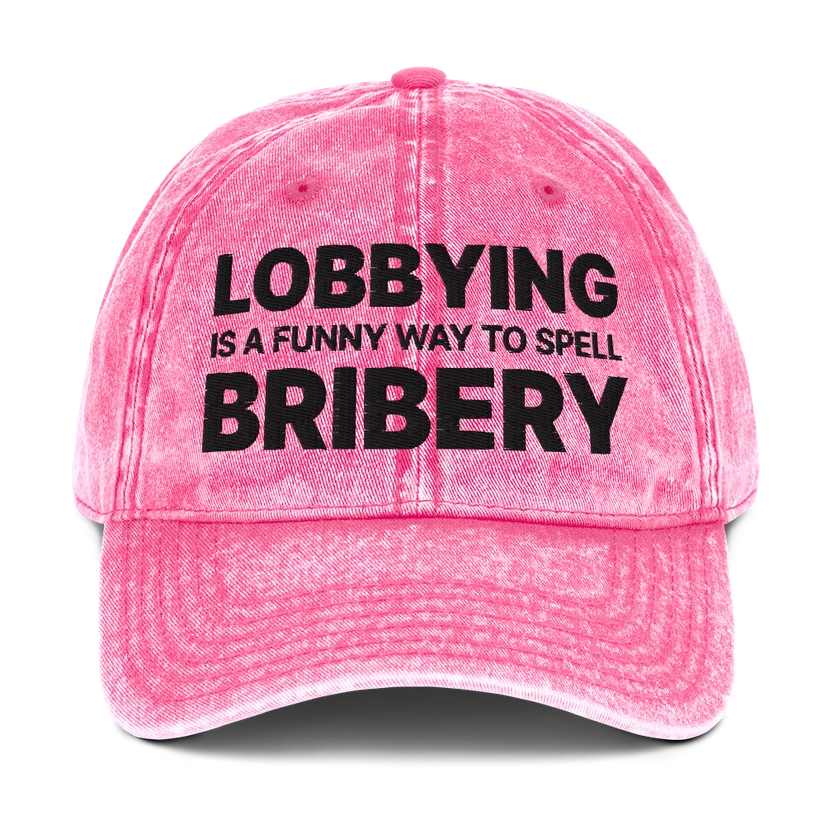
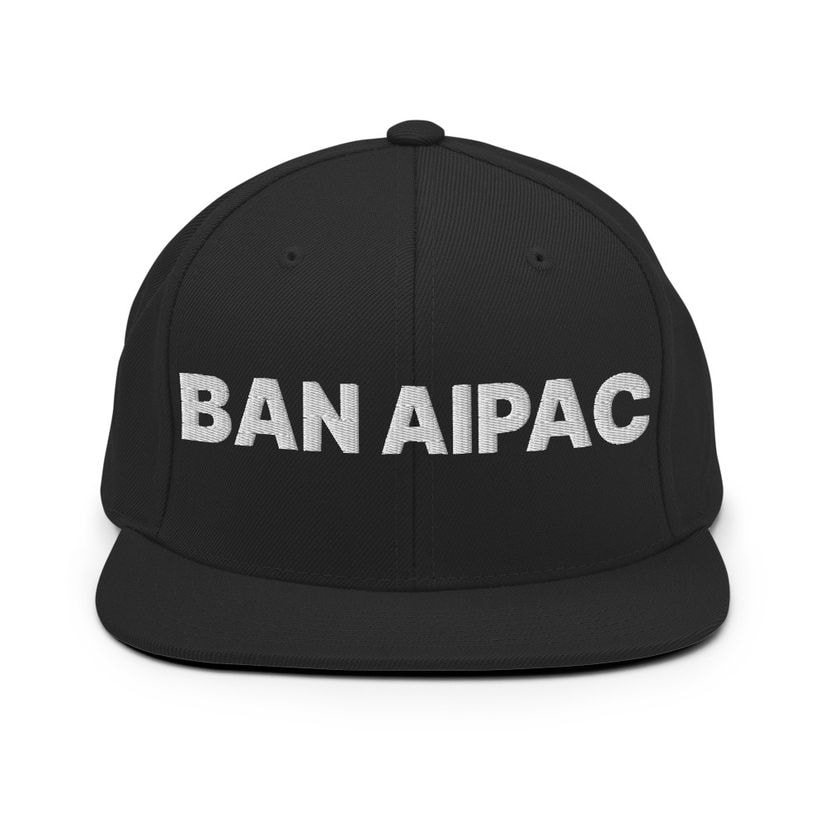
Our Lobbying is a funny way to spell BRIBERY snapback and our BAN AIPAC snapback are not policy. They are invitations. Each one gets asked about, and each question is a chance to talk about reforms like these. If you want a softer silhouette, the pink Lobbying / BRIBERY dad cap makes the same argument.
If you want the case against the lobbying trade itself, read The Case Against Lobbying, Made Plainly.
We keep a running page on lobbying on WeWrite, where we add to this argument as it develops.
Shop the Hat
Start the conversation.Lobbying is a funny way to spell BRIBERY: Black · Orange · Pink dad cap · TropicalBAN AIPAC, black snapbackMade on demand. Checkout on Printful.
Sources
- Thomas Paine, Common Sense (1776), Project Gutenberg: https://www.gutenberg.org/ebooks/147
- 52 U.S.C. § 30121, Contributions and donations by foreign nationals (Cornell LII): https://www.law.cornell.edu/uscode/text/52/30121
- Citizens United v. FEC, 558 U.S. 310 (2010), Supreme Court opinion: https://www.supremecourt.gov/opinions/09pdf/08-205.pdf
- SpeechNow.org v. FEC (D.C. Cir. 2010), FEC case page: https://www.fec.gov/legal-resources/court-cases/speechnoworg-v-fec/
- United Democracy Project outside spending, 2024 (OpenSecrets): https://www.opensecrets.org/outside-spending/detail/2024?cmte=C00799031
- 18 U.S.C. § 207 (Cornell LII): https://www.law.cornell.edu/uscode/text/18/207
- Seattle Democracy Voucher Program: https://www.seattle.gov/democracyvoucher
- Foreign Agents Registration Act, U.S. Department of Justice: https://www.justice.gov/nsd-fara
- Lobbying Disclosure, Office of the Clerk, U.S. House: https://lobbyingdisclosure.house.gov/
- The Federalist Papers, Nos. 51 and 57, Project Gutenberg: https://www.gutenberg.org/ebooks/1404
- U.S. Constitution, transcript (National Archives): https://www.archives.gov/founding-docs/constitution-transcript
Shop the hat
Black · Snapback
Lobbying is a funny way to spell BRIBERY
K Street won't like this one.
$33
View hatOrange · Snapback
Orange Lobbying / BRIBERY
Orange is the new Green.
$33
View hatPink · Dad cap
Pink Lobbying / BRIBERY dad cap
Bribery, dressed up.
$33
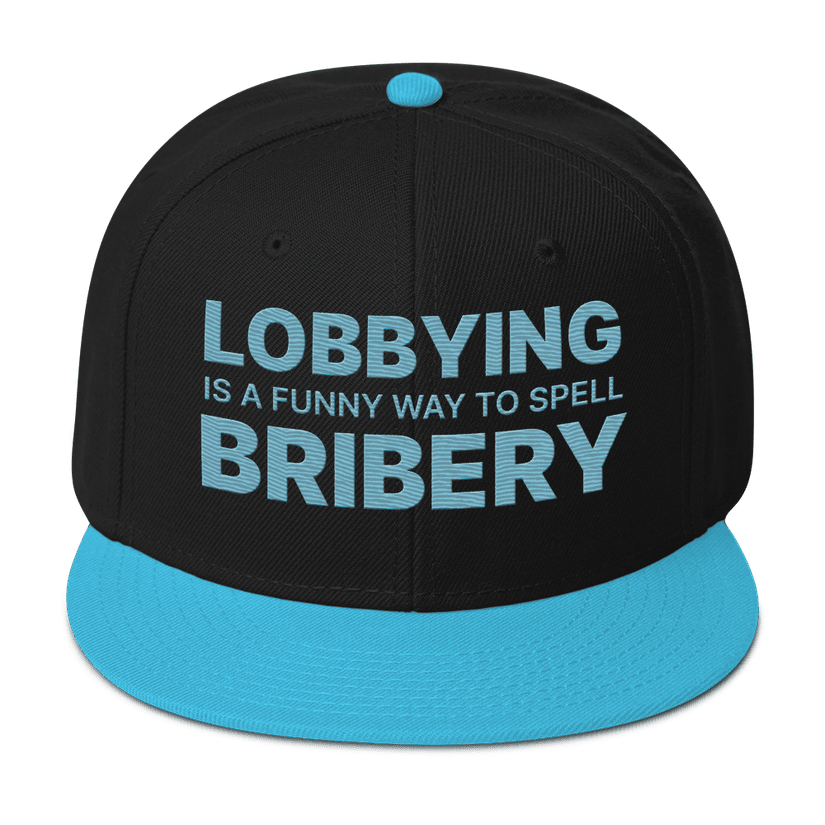
View hatTropical · Snapback
Tropical / blue Lobbying / BRIBERY
Flex on the lobbyists.
$33
View hatBlack · Snapback
BAN AIPAC - Black Snapback
A bold stand against foreign influence.
$30
View hat
Keep reading
November 7, 2026
Why Ban AIPAC? Foreign Lobbying and Self-Government
What AIPAC is and how it operates, from FEC and lobbying records, and a principled case against foreign-interest lobbying for every country.
November 7, 2026
The Case Against Lobbying, Made Plainly
A plain, founders-grounded case against the lobbying industry, from Federalist No. 10 to the revolving door. Not for either party. For the people.
November 7, 2026
Why Americans Stopped Trusting Washington
Only 17% of Americans trust the federal government most of the time. Why trust collapsed under both parties, and what would earn it back.