What the Founders Said About Corruption
Madison, Hamilton, Jefferson and Washington on corruption, in their own verified words, and what their warnings ask of citizens today.

Every generation is tempted to believe its troubles are new. They seldom are. The men who wrote the Declaration and the Constitution spent a great deal of ink on one fear in particular: that a free government, once built, would be quietly bought.
They did not leave us vague sentiments. They left us specific warnings, and in some cases specific laws. What follows is drawn only from their own words, checked against the original texts. Where we could not verify a popular quotation, we have left it out. The founders deserve better than the internet's misattributions.
Madison: Build for Men, Not Angels
James Madison began from a sober view of human nature. In Federalist No. 51 he wrote:
"If men were angels, no government would be necessary. If angels were to govern men, neither external nor internal controls on government would be necessary. In framing a government which is to be administered by men over men, the great difficulty lies in this: you must first enable the government to control the governed; and in the next place oblige it to control itself."
Oblige it to control itself. That is the anti-corruption principle in a single phrase. Madison went on: "A dependence on the people is, no doubt, the primary control on the government; but experience has taught mankind the necessity of auxiliary precautions."
The first control is us. The rest are rules. When either is neglected, the other cannot carry the weight alone.

Federalist No. 57: Keeping Them Virtuous
The Federalist also set out the purpose of the whole design. Federalist No. 57 states that "the aim of every political constitution is, or ought to be, first to obtain for rulers men who possess most wisdom to discern, and most virtue to pursue, the common good of the society; and in the next place, to take the most effectual precautions for keeping them virtuous whilst they continue to hold their public trust."
Notice the phrase "public trust." Office was not a prize or a career ladder. It was a trust, held on behalf of others, and the Constitution was meant to guard it while it was held. We return to this theme in The Case Against Lobbying, Made Plainly.
The Constitution Itself Forbids Foreign Gifts
The founders were concerned enough about corruption to write a rule against it into the Constitution. Article I, Section 9 provides:
"No Person holding any Office of Profit or Trust under them, shall, without the Consent of the Congress, accept of any present, Emolument, Office, or Title, of any kind whatever, from any King, Prince, or foreign State."
The clause is short and absolute in its spirit: those who serve the American people must not be put in debt, however politely, to anyone else.

Hamilton: Foreign Powers and Our Councils
Alexander Hamilton, explaining the method of electing a president in Federalist No. 68, named the danger directly. The enemies of republican government, he wrote, would make their approaches "chiefly from the desire in foreign powers to gain an improper ascendant in our councils."
Hamilton and Madison disagreed on a great many things in later years. On this point they and Washington agreed: influence from outside the body of citizens is a threat to self-rule. We apply that principle evenly, to every country, in Why Ban AIPAC? Foreign Lobbying and Self-Government.
Washington: Party and Foreign Influence
George Washington's Farewell Address of 1796 is perhaps the clearest founding document on corruption by faction. He warned that party combinations could become "potent engines, by which cunning, ambitious, and unprincipled men will be enabled to subvert the power of the people and to usurp for themselves the reins of government."
On foreign influence he was even more emphatic: "Against the insidious wiles of foreign influence (I conjure you to believe me, fellow-citizens) the jealousy of a free people ought to be constantly awake, since history and experience prove that foreign influence is one of the most baneful foes of republican government."
And he added a caution we should take to heart: "But that jealousy to be useful must be impartial." Vigilance that only watches one direction is not vigilance. It is partisanship.

Jefferson: The Monied Corporations
Thomas Jefferson, writing to George Logan on November 12, 1816, reflected on the decline of Britain and turned the lesson homeward:
"I hope we shall take warning from the example and crush in it's birth the aristocracy of our monied corporations which dare already to challenge our government to a trial of strength, and to bid defiance to the laws of their country."
(The spelling "it's" is Jefferson's own.) In the same letter he wrote, "the man who is dishonest as a statesman would be a dishonest man in any station." Jefferson did not believe public life had a separate, looser morality. Neither do we.
What They Ask of Us
Read together, these passages make one demand: that citizens remain the primary control on government. Not one party. Not one faction's champions. The people.
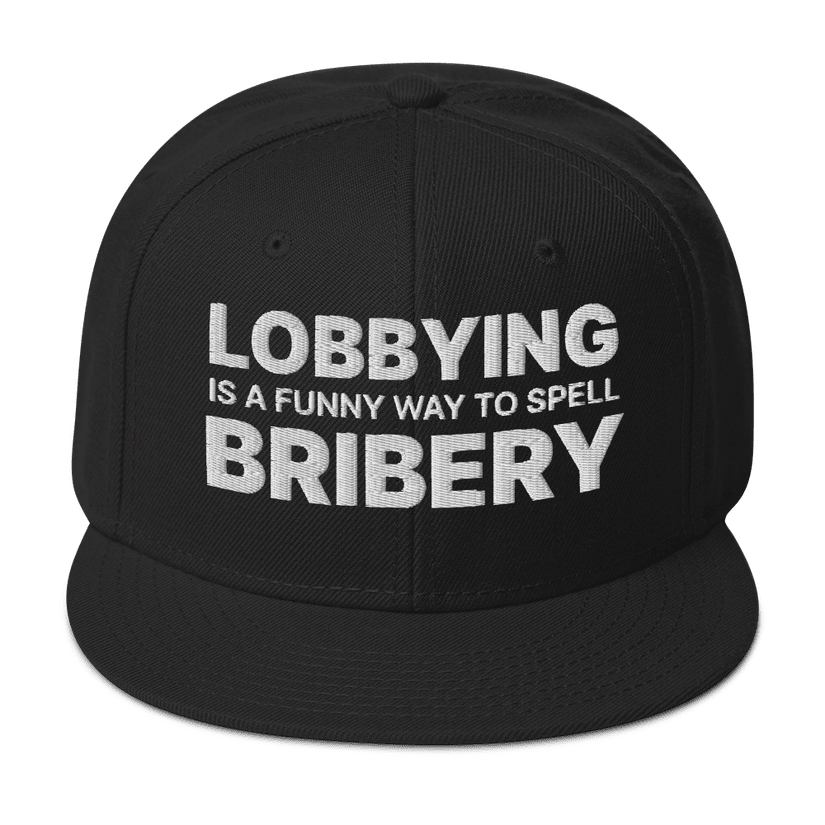
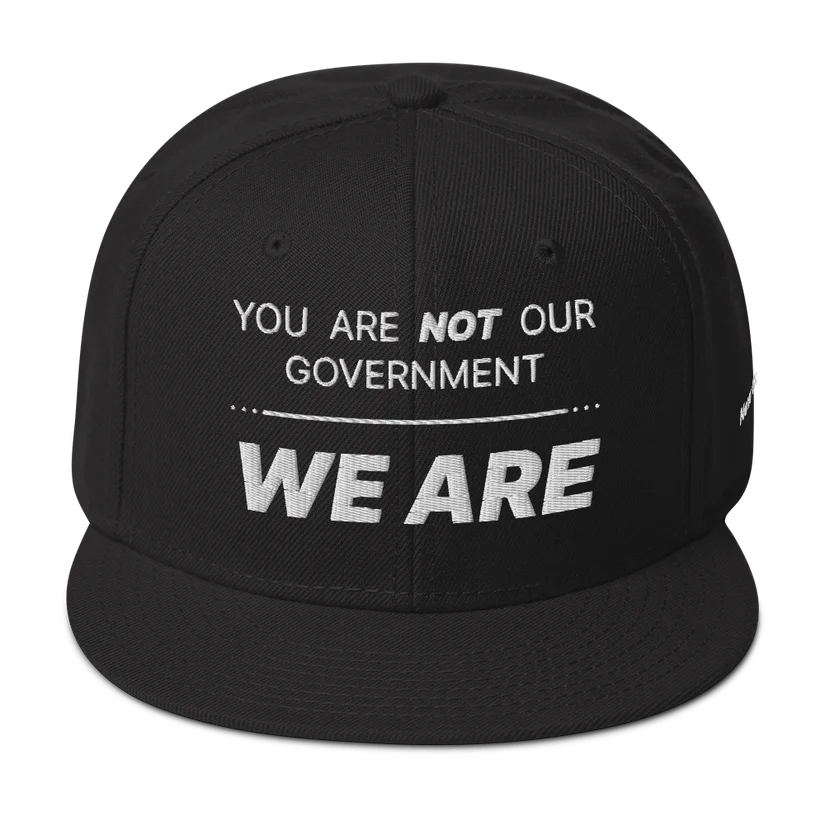
That is what our You are not our government, WE ARE snapback means. And it is why our Lobbying is a funny way to spell BRIBERY hat exists: to name the quiet arrangement the founders feared, in words plain enough to fit on a cap. The founders wrote pamphlets. We are only trying to keep the conversation going.
We collect more on the founding generation in our WeWrite page Spirit of 1776, and a short note on today's version of the problem in Lobbying.
Shop the Hat
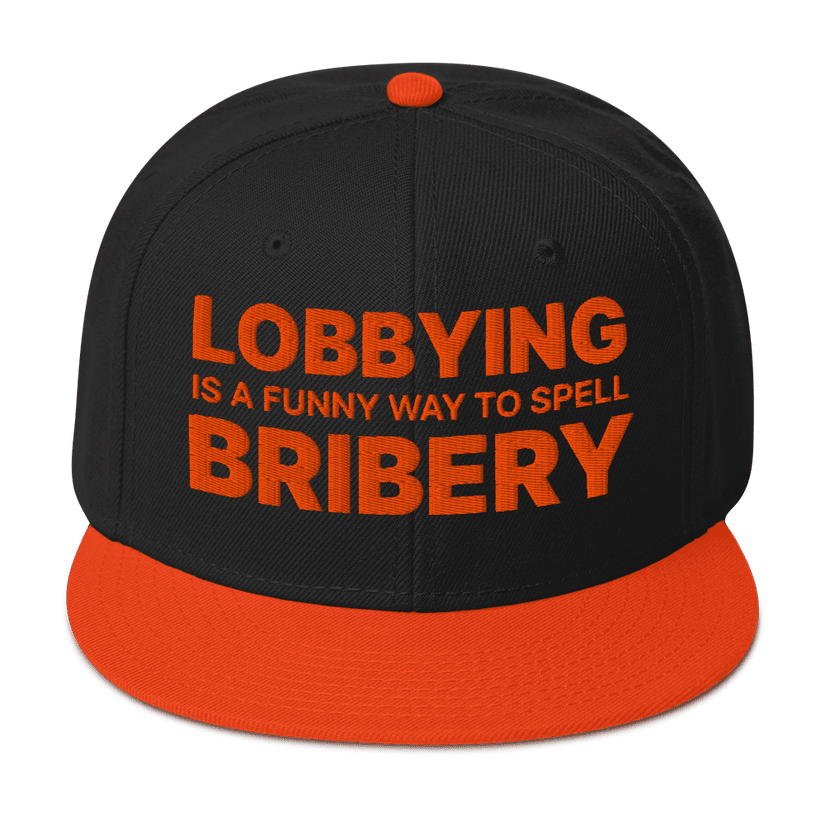
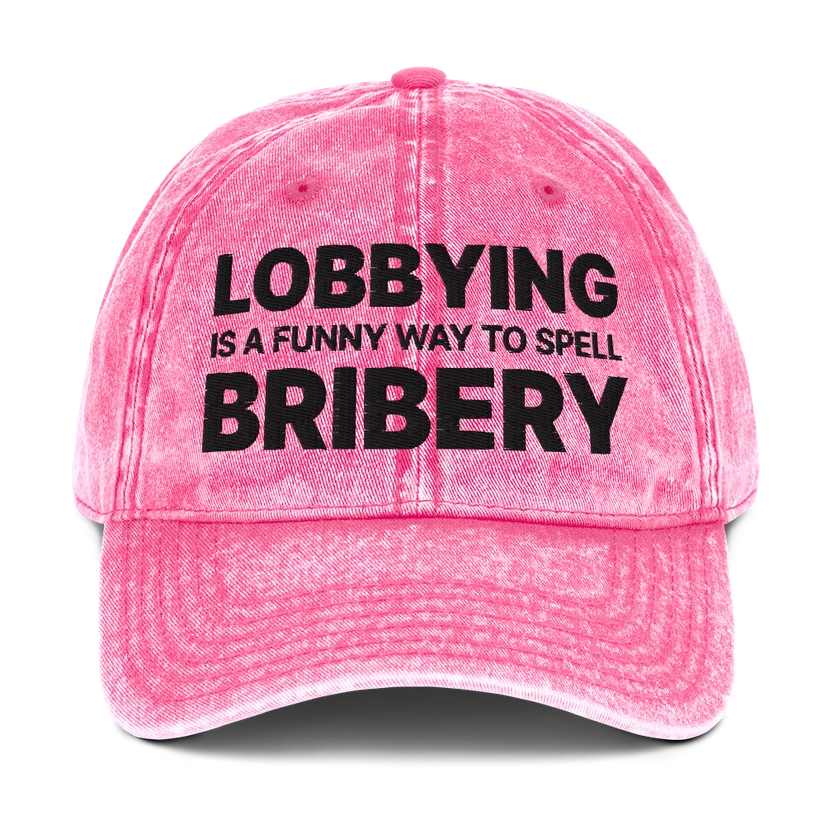
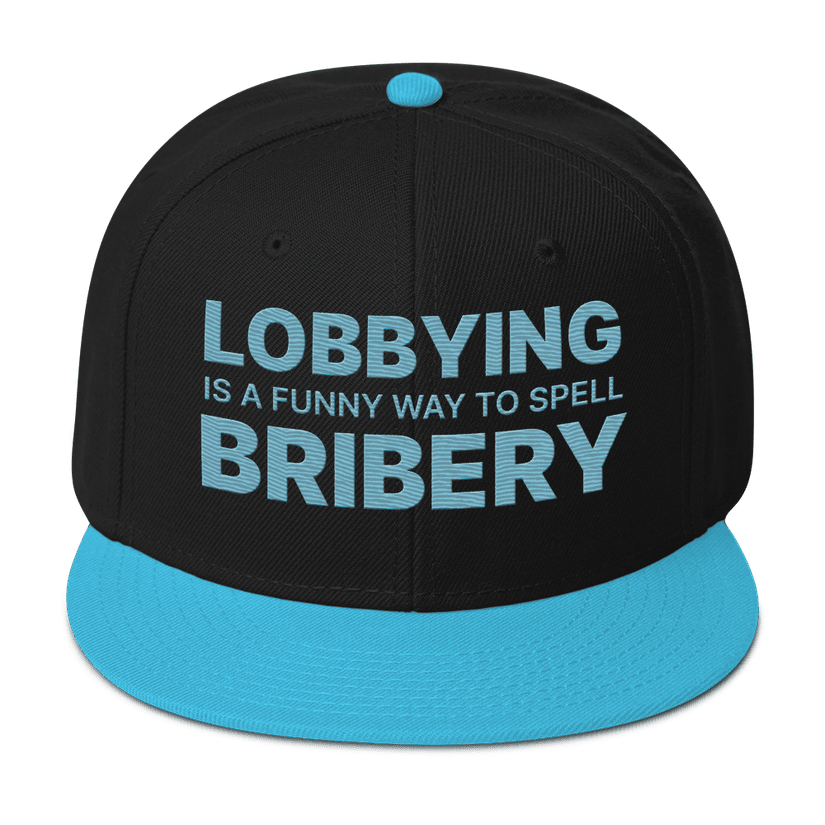
Wear the founders' warning.Lobbying is a funny way to spell BRIBERY: Black · Orange · Pink dad cap · TropicalYou are not our government, WE AREMade on demand. Checkout on Printful.
Sources
- The Federalist Papers, Nos. 51, 57 and 68, Project Gutenberg: https://www.gutenberg.org/ebooks/1404
- U.S. Constitution, transcript (National Archives), Article I, Section 9: https://www.archives.gov/founding-docs/constitution-transcript
- George Washington, Farewell Address (1796), Avalon Project: https://avalon.law.yale.edu/18th_century/washing.asp
- Thomas Jefferson to George Logan, 12 November 1816, Founders Online (National Archives): https://founders.archives.gov/documents/Jefferson/03-10-02-0390
Shop the hat
Black · Snapback
Lobbying is a funny way to spell BRIBERY
K Street won't like this one.
$33
View hatOrange · Snapback
Orange Lobbying / BRIBERY
Orange is the new Green.
$33
View hatPink · Dad cap
Pink Lobbying / BRIBERY dad cap
Bribery, dressed up.
$33
View hatTropical · Snapback
Tropical / blue Lobbying / BRIBERY
Flex on the lobbyists.
$33
View hatBlack · Snapback
You are not our government, WE ARE
Wear the spirit of the people.
$33
View hat
Keep reading
November 7, 2026
The Case Against Lobbying, Made Plainly
A plain, founders-grounded case against the lobbying industry, from Federalist No. 10 to the revolving door. Not for either party. For the people.
November 7, 2026
Why Ban AIPAC? Foreign Lobbying and Self-Government
What AIPAC is and how it operates, from FEC and lobbying records, and a principled case against foreign-interest lobbying for every country.
November 7, 2026
Why Americans Stopped Trusting Washington
Only 17% of Americans trust the federal government most of the time. Why trust collapsed under both parties, and what would earn it back.